 Analyze Your Text
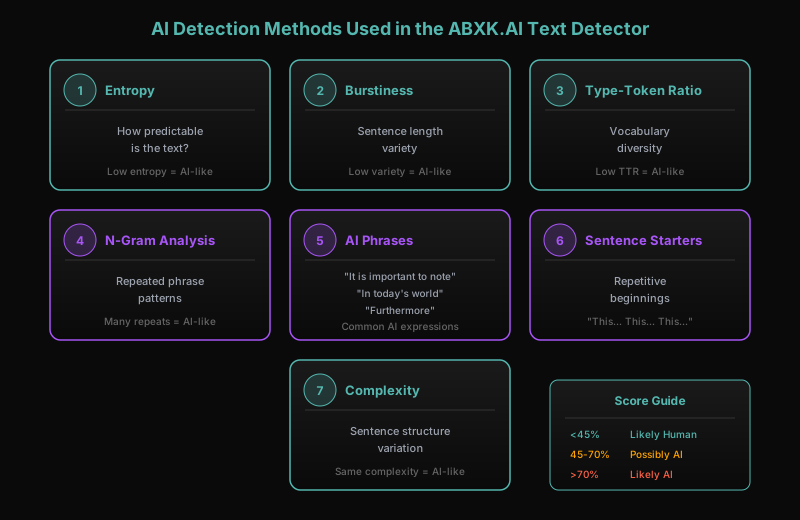
This tool explores different ways to spot text written by AI. These methods include using statistics, studying language patterns, and applying advanced machine learning tools.
How It Works
Perplexity and Burstiness
Perplexity is a measure used in language models to show how predictable a piece of text is. Simply put, it tells us how "surprised" a model is by the words.
Burstiness refers to how much perplexity changes from one sentence to the next. Human writing tends to mix things up — sometimes it's complex, sometimes simple.
Stylometric Analysis
Stylometry is the study of writing style. It helps identify who wrote a text by analyzing their unique way of writing.
Advanced Detection Methods
Modern detection methods use transformer embeddings from models like BERT. These models turn text into high-dimensional vectors that capture meaning and structure.
Challenges and Limitations
- False Positives: Some human-written content is wrongly flagged as AI.
- Bias Against Non-Native Writers: AI detectors can unfairly target writing by non-native speakers.
- Evading Detection: Simple changes can fool many detection systems.
- Short Text Issues: Detecting AI in short texts is much harder.
Important Note: AI detection results should be used as a clue — not as final proof.
 AI Blog